
Why simple nutrition tips are the key to consistent, sustainable eating
Healthy eating isn’t supposed to be confusing, but with so much conflicting advice online, it has become harder than it should be.
When you strip away the noise, the most effective nutrition approaches all revolve around a few timeless principles – balance, consistency, real food, and enough protein to support your body.
By consistently following a few core principles and simple nutrition tips, you can take the confusion out of healthy eating and build a diet that’s sustainable, satisfying, and good for you.
Build your diet around real, whole foods
No matter which diet you subscribe to, whether it’s low-carb, keto, paleo, intermittent fasting or the Mediterranean diet, one principle underpins them all: natural, minimally processed foods are the foundation of good nutrition.
Whole foods deliver vitamins, minerals, fibre, enzymes, phytochemicals, and the energy your body can actually use in the right ratios and the best forms. They keep you fuller for longer, support digestion, and stabilise your energy levels.
Simplify your plate with these nutrition tips:
- Load your plate with colourful vegetables.
- Add a high-quality protein source.
- Fill in the rest with minimally processed carbs and healthy fats.
- Include some whole fruit throughout the day.
While fresh is great, local is ideal, and seasonal is smart, don’t forget that frozen fruit and veg are still nutritious. Don’t overthink it.
Nutrient density over calorie density
Modern foods tend to give us tons of energy but very few nutrients, which is a sure-fire way to overeat yet still feel undernourished.
Nutrient-dense foods give you more vitamins, minerals, and beneficial compounds per calorie. They help you stay leaner, feel more energised, and regulate your appetite naturally.
Ideal nutrient-dense foods include:
- Vegetables
- Fruit
- Legumes
- Lean proteins
- Eggs
- Whole grains
- Nuts and seeds
Include some raw produce when possible for a nutrient boost, but remember: cooking some foods actually makes nutrients more available.
If your diet needs a boost, natural superfood powders or greens supplements can help, but food should come first.
Master portion control
Portion sizes have ballooned over the past few decades, and our waistlines followed. Even healthy foods can derail your progress if you consistently eat too much of them.
Fortunately, you don’t need a food scale or a calorie-tracking app to get portions right.
Use these simple visual cues:
- Half your plate: Colourful vegetables and fruits
- Protein: Roughly the size of your palm
- Carbs (rice, potatoes, pasta, grains): About one fist
- Fats (oil, butter, avocado, nuts): One thumb or tablespoon
These guidelines keep total energy in check while ensuring your meals are balanced and satisfying.
Limit artificial ingredients and added sugars
Many packaged foods contain sweeteners, flavourants, preservatives, and manufactured fats, which tend to make you want more and more.
They’re energy-dense, nutrient-poor, and linked to various potential health conditions linked to metabolic syndrome and lifestyle disease.
Sugar is a major culprit. It spikes your blood sugar, fuels cravings, affects your mood, and contributes to obesity and metabolic disease. It also hides in surprising places, so reading ingredient labels is essential. You don’t need to eliminate sugar forever, but reducing it will transform how you feel, function and look.
Meet your protein needs
With all the focus on carbs, sugar and fats, it’s common to overlook the importance of protein in a balanced diet.
Protein is essential for muscle repair and growth, appetite control, metabolic health, hormone and enzyme production, and better body composition.
Recommended intakes vary from 0.8g per kilogram per day (g/kg/day) for inactive individuals¹ to 1.6-2.2 g/kg/day² for active individuals who need to support muscle repair and growth.
For years, we have also been told how important it is to get some bioavailable (rapidly digested and absorbed) protein in as soon as possible after exercise.
While the anabolic window – that short period after training when your body is more efficient at absorbing protein – is a beneficial time to down a protein shake, it is more important that we meet our total daily protein needs throughout the day.
Consuming protein at regular intervals across the day provides a sustained supply of amino acids for muscle repair, recovery, and hormone production. This is where protein supplements can play a valuable role. They’re not only great post-workout, they offer convenience, consistency, and a quick way to hit your daily intake, especially on busy days or when appetite is low.
Good sources include:
- Lean meats and poultry
- Fish
- Eggs
- Greek yoghurt and cottage cheese
- Legumes
- Tofu, tempeh, and plant-based proteins
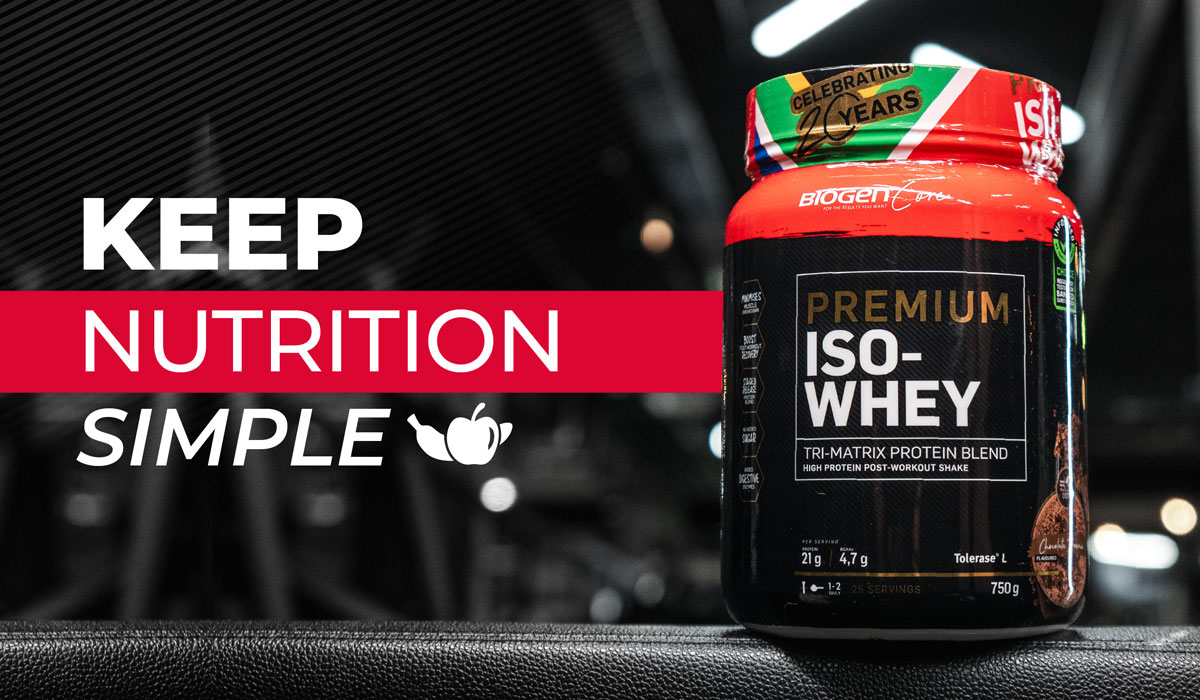
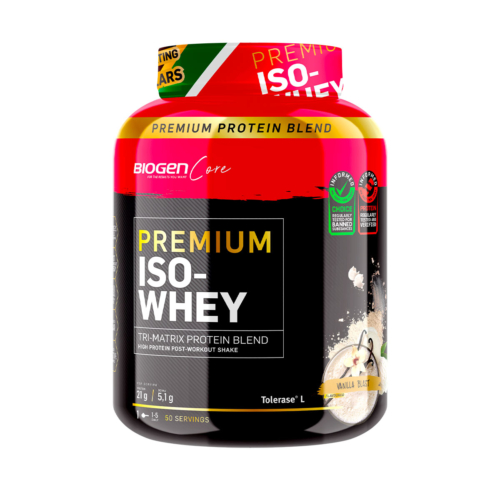
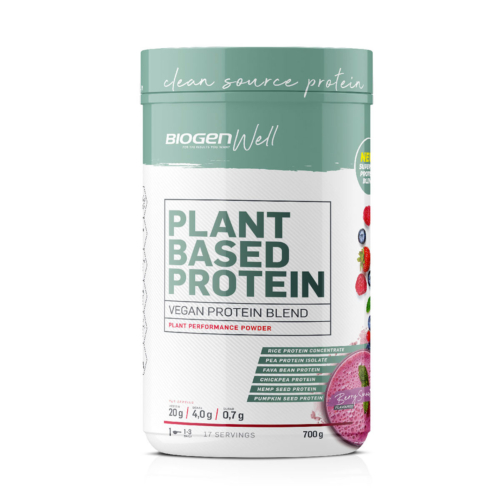
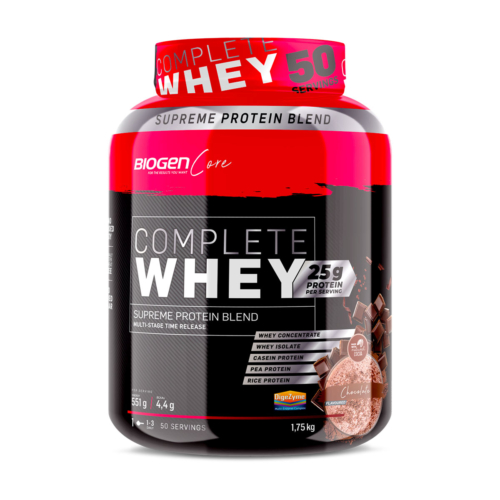
- Protein powders like Biogen Iso-Whey Premium Protein, Biogen Plant Based Protein or a blend like Biogen Complete Whey.
If you nail your protein intake, your diet becomes easier by default, resulting in fewer cravings, better recovery, more stable energy, and improved strength and endurance.
Simple sustainability
You don’t need rigid rules, extreme diets, or complicated tracking systems. If you focus on whole foods, nutrient density, sensible portions, fewer artificial ingredients, and consistent protein intake, you’re already 90% of the way there. Nutrition becomes a powerful ally when you simplify your approach because when it’s simple, it becomes sustainable.
Support Your Nutrition the Simple Way
REFERENCES:
- Lonnie M, Hooker E, Brunstrom JM, Corfe BM, Green MA, Watson AW, Williams EA, Stevenson EJ, Penson S, Johnstone AM. Protein for Life: Review of Optimal Protein Intake, Sustainable Dietary Sources and the Effect on Appetite in Ageing Adults. Nutrients. 2018 Mar 16;10(3):360. doi: 10.3390/nu10030360. PMID: 29547523; PMCID: PMC5872778.
- Morton RW, Murphy KT, McKellar SR, et al. A systematic review, meta-analysis and meta-regression of the effect of protein supplementation on resistance training-induced gains in muscle mass and strength in healthy adults. Br J Sports Med 2018;52:376–84.doi:10.1136/bjsports-017-097608.
- Arash Bandegan, Glenda Courtney-Martin, Mahroukh Rafii, Paul B Pencharz, Peter WR Lemon, Indicator Amino Acid–Derived Estimate of Dietary Protein Requirement for Male Bodybuilders on a Nontraining Day Is Several-Fold Greater than the Current Recommended Dietary Allowance12, The Journal of Nutrition, Volume 147, Issue 5, 2017, Pages 850-857, ISSN 0022-3166,
https://doi.org/10.3945/jn.116.236331.